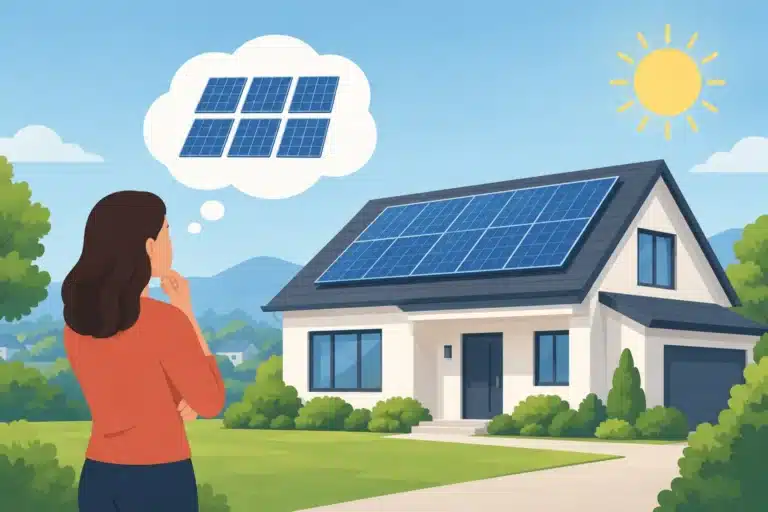
A solar system that is too small leaves savings on the table. One that is oversized without a plan can add unnecessary upfront cost. So, how many solar panels do I need? The right answer starts with your electricity use, but it also depends on your roof, daily habits, local sunlight, and the electric upgrades you expect to make next.
For most homes, the goal is not simply to cover every kilowatt-hour shown on a bill. It is to build a system that delivers strong value over time, works with your household routine, and gives you room for future energy needs.
Start With Your Electricity Consumption
Your utility bill is the most useful place to begin. Look for your total electricity use in kilowatt-hours (kWh), ideally across 12 months. A single summer or winter bill can be misleading because heating, cooling, and daylight hours change throughout the year.
Add up your annual usage and divide it by 12 to find your average monthly consumption. For example, a home using 12,000 kWh per year averages about 1,000 kWh per month. A lower-use household may consume 6,000 to 8,000 kWh annually, while a larger family home with electric heating, pool equipment, or frequent air conditioning may use considerably more.
That number gives your installer a starting point, not a final answer. A household that uses most power during sunny daytime hours can benefit from a different system design than a household where demand peaks after sunset.
How Many Solar Panels Do I Need Based on System Size?
Solar panels are typically rated by their power output in watts. Many modern residential panels are around 400 watts, although available models vary. To estimate the number of panels, divide the planned system size by the panel wattage.
A 6 kW system paired with 400-watt panels needs about 15 panels. An 8 kW system needs about 20 panels, and a 10 kW system needs about 25 panels.
Here is what those sizes can look like for many homes:
- A 5 to 6.6 kW system often suits modest to average electricity use.
- An 8 to 10 kW system can make sense for larger households or homes with substantial daytime use.
- A 10 to 13.2 kW system may be worth considering for high-use properties, all-electric homes, or households planning major upgrades.
These are planning ranges, not promises of exact production. The same 20 panels can generate different amounts of electricity depending on panel output, roof direction, shade, weather patterns, and installation design.
A Simple Way to Estimate Solar Production
A well-designed solar system does not produce its full nameplate capacity every hour of the day. Production rises in the morning, peaks around midday, and drops toward evening. Seasonal weather also matters.
As a broad estimate, a 1 kW solar system can produce roughly 3.5 to 5 kWh per day in a favorable location. That means a 6.6 kW system may generate roughly 23 to 33 kWh on an average day. Actual performance can be higher or lower.
If your home uses 30 kWh per day, a system in this range could be a sensible starting point. But if much of that use happens at night, solar panels alone will not cover it in real time. You may export power during the day and still buy electricity from the grid after dark.
That is where batteries, load shifting, and smart appliance use can make a real difference.
Your Roof Can Set the Real Limit
Panel count is not only an energy question. It is also a roof question. Each panel takes up valuable space, and the most productive roof areas should be prioritized first.
A clear, north-facing roof is often ideal in the Southern Hemisphere, but east- and west-facing arrays can also be an excellent choice. East-facing panels generate more power earlier in the day, while west-facing panels can better support afternoon cooling and evening household demand. Splitting panels across roof faces may improve how closely solar production matches your actual use.
Shade needs careful attention. Trees, chimneys, neighboring buildings, skylights, vents, and roof angles can affect output. A quality installer assesses the site rather than recommending a generic panel count from a utility bill alone. In some cases, fewer panels in a better location will outperform a crowded design with partial shading.
Your roof condition matters, too. If it needs repairs or replacement soon, address that work before panels are installed. Removing and reinstalling a solar array later costs more than planning the project properly from the start.
Plan for the Home You Are Building Toward
The best time to think about future electricity use is before your solar system is installed. Many homeowners initially size solar around their current bill, then add electric appliances that change the equation.
A heat pump water heater, electric space heating, air conditioning, induction cooking, pool heating, and an electric vehicle can all increase electricity demand. They can also make solar more valuable when they are scheduled to run during daylight hours.
For example, a household currently using gas for hot water and heating may have modest electric bills today. If the plan is to electrify those systems over the next few years, installing the smallest possible solar array may not be the best long-term value. Provided your roof, switchboard, inverter, and local rules allow it, allowing capacity for future demand can prevent an expensive system expansion later.
There is still a trade-off. Oversizing for upgrades that may never happen is not always sensible. The goal is a realistic plan based on appliances you genuinely expect to add, not an inflated estimate designed to sell more panels.
Should You Add a Battery?
Solar panels generate electricity when the sun is available. A battery stores surplus daytime generation so it can be used later, reducing the amount of electricity you need to buy during evening hours.
A battery may be especially attractive if your household is busy after work and school, if your electricity plan has high evening rates, or if backup capability matters to you. It can also help you use more of the power your panels produce rather than sending it to the grid.
However, a battery does not automatically mean you need a much larger solar system. The right combination depends on how much surplus solar you generate, when your home consumes electricity, your battery goals, and your budget. In some homes, installing enough solar capacity first and adding battery storage later is the practical path. In others, designing both together produces a better result.
Do Not Size Solar Around the Lowest Quote
Two quotes can list the same number of panels but deliver very different outcomes. Panel quality, inverter capacity, warranties, mounting equipment, roof layout, electrical upgrades, monitoring, and installer experience all affect the value of the system.
Ask whether the quoted system accounts for shading, roof orientation, expected annual generation, future appliance plans, and local incentive eligibility. Also confirm who will install it, what warranties apply, and whether the equipment is appropriately certified for the project.
At Sol Excel, the focus is on matching household needs with dependable equipment, qualified installation, and pricing that makes the upgrade financially practical. A properly sized system should feel clear on paper before installation begins.
Get an Estimate That Uses Your Real Energy Data
Online solar calculators can offer a quick starting point, but they cannot see your roof or understand how your household uses power. A useful assessment reviews your bills, roof space, shading, electrical setup, daytime consumption, and plans for batteries or electric appliances.
Bring at least 12 months of electricity bills to the conversation if you can. Mention any changes ahead, such as a new electric vehicle, a planned heat pump, growing family needs, or more time working from home. Those details can change the recommended system size significantly.
The right number of panels is the number that fits your home, your budget, and the way you plan to live in it. Start with your real usage, make room for realistic changes, and insist on a design that explains where your savings are expected to come from.