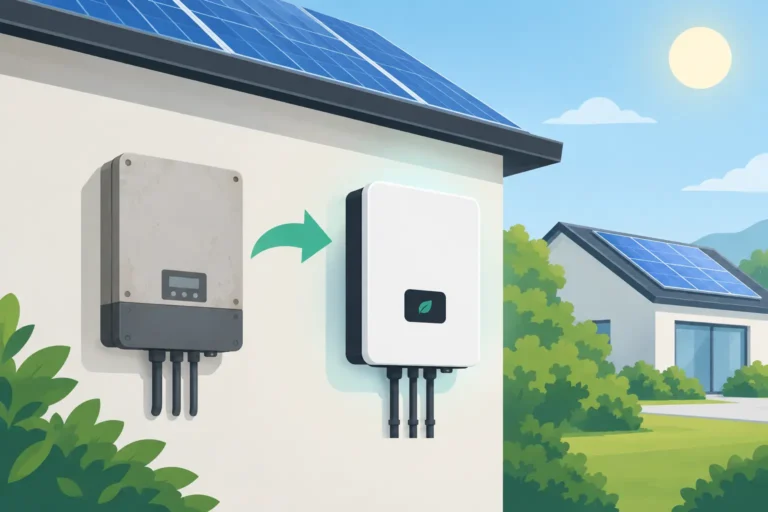
A solar system can look perfectly fine from the street while quietly producing far less power than it should. If your monitoring app shows repeated faults, output has dropped sharply, or the inverter screen is blank, solar inverter replacement may be the step that gets your household savings back on track.
Your panels generate electricity, but the inverter turns that power into electricity your home can use. When it stops working reliably, even high-quality panels cannot deliver their full value. The good news is that replacing an inverter is usually far less disruptive and less expensive than replacing an entire solar system – provided you choose equipment that suits your existing setup and future energy plans.
Is the Inverter Actually the Problem?
A low production reading does not automatically mean the inverter has failed. Shade from new tree growth, dirty panels, a tripped safety switch, a grid outage, or an internet connection issue can all affect what you see in an app. Seasonal weather also matters. Comparing a cloudy winter month with a bright summer month will not give you a useful diagnosis.
Signs that deserve a closer look include recurring error codes, warning lights that do not clear after a restart, loud or unusual fan noise, water damage, and an inverter that frequently shuts down during sunny periods. If the unit is no longer communicating with its monitoring platform, that can be a simple connectivity problem, but it can also point to an aging inverter or failed internal component.
A qualified installer should inspect the system before recommending replacement. They can test the inverter, check panel strings and cabling, review fault history, and make sure the issue is not being caused by an isolator, meter, switchboard, or grid connection. Replacing the wrong component wastes money and leaves the original problem unresolved.
When Solar Inverter Replacement Makes Financial Sense
Most solar panels are designed for a long service life, while inverters generally have a shorter working lifespan. Many string inverters operate reliably for around 10 to 15 years, although heat exposure, installation location, system quality, and maintenance can affect that timeline. An inverter installed in full afternoon sun or a poorly ventilated area may wear out sooner than one installed in a protected, well-aired location.
Replacement is usually the practical choice when the existing inverter is out of warranty, has a major internal fault, or has become unreliable enough to reduce generation. Each day a failed unit sits idle is a day your home buys more power from the grid than necessary. For households with rising electricity costs, restoring solar production quickly can matter more than trying to keep an unreliable unit running through repeated repairs.
Repair can still be worthwhile in some cases. A replaceable fan, minor connection fault, or issue covered by the manufacturer warranty may not require a new inverter. But if the repair is costly, parts are unavailable, or the model has a history of recurring faults, putting that money toward a new unit often gives you better long-term value and fresh warranty protection.
What Affects Solar Inverter Replacement Cost?
There is no one-price answer because the right replacement depends on your system, electrical setup, and goals. A like-for-like inverter swap is generally simpler than upgrading to a battery-ready hybrid inverter, changing system capacity, or bringing older electrical components up to current requirements.
The main cost factors are the inverter type and capacity, number of panel strings, access to the installation area, condition of existing cabling and isolators, switchboard work, monitoring setup, and labor. If the original system was undersized or poorly designed, replacement may also be an opportunity to correct limitations that have been affecting performance.
Do not select a replacement based on the cheapest unit alone. A lower upfront price can become expensive if the inverter does not match your panel array, lacks reliable local support, or creates compatibility issues with a battery you want later. The best value comes from equipment sized correctly, installed by qualified professionals, and supported by a clear product and workmanship warranty.
Choose an Inverter for Your Next Upgrade, Not Just Today
If you are replacing an inverter after several years, your household energy use may have changed. Perhaps you now work from home, have added air conditioning, are considering an electric vehicle, or want to move from gas hot water to an efficient heat pump. Those changes can make a straightforward replacement decision more strategic.
Standard String Inverter
A standard string inverter is often the sensible option when you want to restore an existing solar system without adding battery storage soon. It can be a cost-effective choice for a household with a straightforward roof layout and consistent panel performance.
Hybrid Inverter
A hybrid inverter can manage both solar generation and battery storage. It may cost more upfront, but it can avoid having to replace equipment again if a battery is part of your near-term plan. Whether this is worthwhile depends on your budget, electricity usage after sunset, available rebates, and the type of battery you intend to install.
Capacity and Compatibility
The new inverter must suit the size and configuration of your existing solar array. Your installer should consider panel wattage, voltage limits, string layout, roof orientation, export requirements, and whether your property has single-phase or three-phase power. They should also confirm compatibility with optimizers, microinverters, consumption monitoring, and any existing battery equipment.
For Victorian households, distributor requirements and export limits can affect what is possible. A larger inverter is not automatically better if your approved export capacity is limited or your panel array cannot support it. Good system design is about matching equipment to real-world conditions, not simply choosing the biggest number on a spec sheet.
Rebates, Warranties, and the Paperwork That Matters
Government incentives often focus on new solar installations, batteries, or other electrification upgrades rather than a simple inverter replacement. Eligibility changes over time and depends on the program, product, property, and installation scope. If you are combining inverter replacement with a larger upgrade, ask for a clear explanation of which incentives may apply before committing.
Warranty terms deserve the same attention. Check whether your current inverter is still covered and whether the manufacturer covers parts, labor, or both. With a replacement, ask about the new product warranty, installation workmanship warranty, expected support process, and what happens if a fault occurs years from now.
Keep your original system documents, serial numbers, monitoring login details, and past service records. This information helps an installer diagnose faults faster and makes it easier to confirm warranty status.
What a Professional Replacement Should Include
A proper inverter replacement is more than mounting a new box on the wall. The installer should assess the full system, safely isolate the equipment, fit and commission the inverter, test generation, configure monitoring, and explain how to confirm the system is operating normally.
You should also receive clear documentation for the work completed. This is particularly valuable if you sell your home, make an insurance claim, add a battery later, or need service under warranty. Clean Energy Council-certified installers and approved equipment are practical protections, not just paperwork. They help ensure the system is designed and installed to applicable standards.
Sol Excel coordinates solar upgrades with qualified independent installers, helping Melbourne homeowners compare practical replacement options without paying for unnecessary equipment. The aim is simple: restore reliable solar production while keeping the system ready for the way your home uses energy next.
Before You Book a Replacement Quote
Gather a few details before speaking with an installer. They will make the assessment faster and help avoid assumptions:
- Your current inverter make, model, and serial number
- Photos of fault codes, warning lights, and the inverter location
- Recent electricity bills and solar production screenshots
- Information about planned battery, EV, heating, or hot-water upgrades
If the inverter has stopped producing, do not wait months hoping the problem resolves itself. A clear diagnosis will tell you whether a repair is sensible or a replacement is the better investment. The right replacement should not simply get the lights on again – it should help your home keep more of the solar power it already has the capacity to produce.