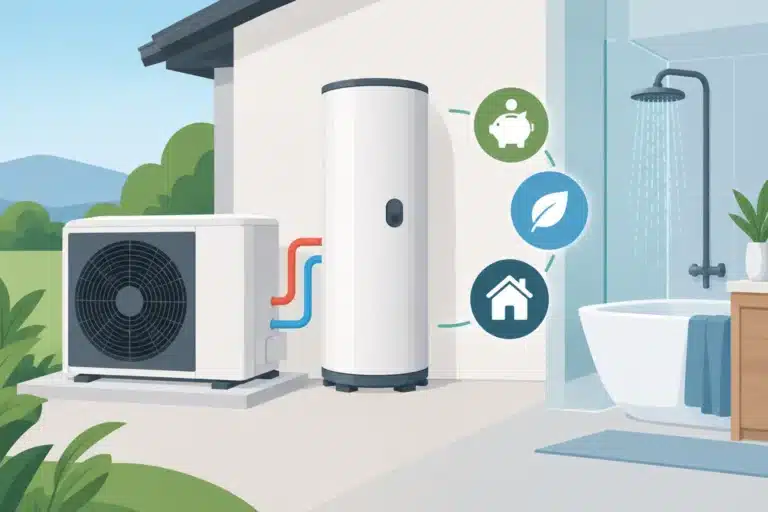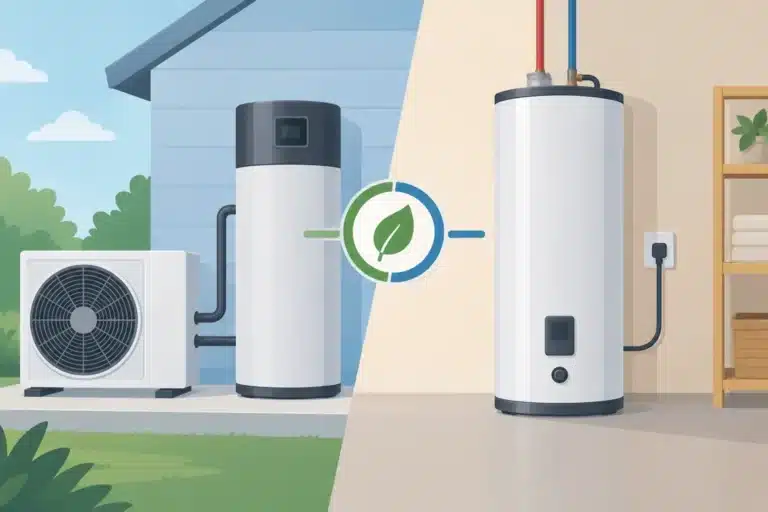
A failed hot-water system is rarely convenient. It usually means cold showers, an urgent replacement decision, and a bigger question: should you buy the cheapest electric tank available, or invest in a heat pump? In the heat pump vs electric hot water comparison, the right answer comes down to your household’s hot-water use, available budget, solar setup, and how long you plan to stay in the home.
For many Victorian households, a heat-pump hot-water system costs more upfront but can cut the electricity needed to heat water dramatically. A conventional electric storage unit is simpler and often cheaper to purchase, but it can be one of the largest ongoing energy users in an all-electric home. The difference matters even more when you are trying to get the best return from rooftop solar.
How heat pumps and electric hot-water systems work
A standard electric storage water heater works much like an electric kettle. An internal heating element converts electricity directly into heat, warming the water stored in the tank. It is a familiar, proven technology with relatively straightforward installation requirements.
A heat pump takes a different approach. It draws heat from the surrounding air and transfers that heat into the water tank through a refrigeration process. It uses electricity to run the compressor and fan, but it does not need to create all of the heat itself. That is why a quality heat pump can deliver several units of hot-water heat for every unit of electricity it consumes.
Put simply, conventional electric hot water makes heat. A heat pump moves heat. That difference is the reason heat pumps are usually the more efficient long-term option.
Heat pump vs electric hot water: the running-cost difference
Running cost is where heat pumps generally pull ahead. Electric resistance systems can consume a substantial amount of grid electricity every day, especially in homes with several people, frequent showers, or high hot-water use from washing machines and dishwashers.
Because a heat pump is more efficient, it may use far less electricity for the same amount of hot water. Actual savings depend on tank size, household demand, local weather, electricity rates, operating settings, and the model you choose. Still, for a typical family home, the reduction can be meaningful over the life of the system.
This is also where solar can change the numbers. If your home has solar panels, a heat pump can be scheduled to run when solar production is strongest. Rather than exporting excess daytime power for a modest feed-in credit, you can use that energy to heat the water your household will need later. The tank effectively becomes a simple form of thermal energy storage.
A standard electric storage unit can also be run during solar hours, so it can still work well with solar. It just needs more electricity to do the same job. If roof space or solar output is limited, the efficiency advantage of a heat pump becomes even more valuable.
Upfront price and installation considerations
A conventional electric hot-water system usually wins on initial purchase price. The equipment is often less expensive, and replacing an existing electric tank can be relatively simple if the plumbing, electrical supply, and location are suitable.
Heat pumps cost more because they use more complex technology. Installation may also require additional planning around placement, drainage, electrical requirements, clearances, and noise. The outdoor unit needs airflow to operate properly, and installers need safe access to complete the job to standard.
That higher starting cost should not be viewed in isolation. Victorian incentives and rebates may reduce the installed cost of eligible heat-pump systems, depending on current programs and household circumstances. Eligibility, approved products, and available funding can change, so it is worth confirming what applies before selecting a system.
The useful comparison is not just the purchase price. Compare the installed price after eligible incentives, expected energy use, warranty coverage, and likely operating cost over the years you expect to own the unit. A cheaper system can cost more over time if it uses significantly more electricity every day.
When a heat pump is the better choice
A heat pump is often the strongest choice for households that use plenty of hot water and want lower ongoing bills. It is particularly suited to homeowners who already have solar, are planning solar, or want to reduce their dependence on gas and grid power.
It can also make sense when your existing gas water heater reaches the end of its life. Replacing gas hot water with an efficient electric heat pump can reduce gas consumption while allowing more of your household energy use to be supplied by solar.
A heat pump is not automatically the best fit for every property. Location matters. The unit needs a suitable outdoor position with good ventilation, and some models produce audible fan and compressor noise while operating. In a tightly packed townhouse development or beside a bedroom window, careful product selection and placement are essential.
Cold weather is another factor worth discussing. Modern heat pumps are designed to operate across a range of conditions, but performance can vary by model and temperature. A properly sized, reputable unit with professional installation is far more important than choosing based on the lowest advertised price alone.
When conventional electric hot water may make sense
Conventional electric storage hot water remains a practical option in some situations. If you need an urgent, low-cost replacement, have a small household, or have limited space for a heat-pump installation, an electric tank may be the sensible answer.
It can also suit properties where noise, airflow, access, or installation layout makes a heat pump difficult. The key is to choose the right tank size and, where possible, set it up to make use of daytime solar generation.
For a household with modest hot-water demand and a strong solar system, the running-cost gap may be less dramatic than it would be for a larger family buying most of its electricity from the grid. That is why a site-specific recommendation is more useful than a one-size-fits-all claim.
Tank size matters as much as technology
The best hot-water system can still disappoint if it is undersized. A family of four with back-to-back evening showers needs a different solution from a one- or two-person household with staggered usage.
A larger tank provides more stored hot water and can help a heat pump run during daylight hours, when solar output is available. But oversizing also adds upfront cost and may increase standing heat losses. The goal is enough capacity for normal peak demand without paying to heat water that will rarely be used.
When comparing quotes, ask how the recommended tank size was calculated. A professional assessment should consider the number of occupants, shower habits, bathrooms, appliances, existing energy supply, solar generation, and available installation space.
What to check before you buy
Price matters, but it should not be the only decision point. A hot-water system is expected to work every day for years, so check the complete offer rather than just the headline figure.
Look closely at the product warranty, the warranty on installation workmanship, tank capacity, noise specifications for heat pumps, electrical work required, plumbing changes, and whether the installer is appropriately qualified. If rebates are part of the quote, make sure the assumptions are clearly explained and that you understand any eligibility requirements.
For homes with solar or battery storage, ask how the system can be scheduled around daytime generation. A well-configured heat pump can make a noticeable difference to self-consumption, helping your home use more of the power it produces.
Make hot water part of your energy plan
Hot water is not a minor household expense. It is a daily energy load, and it should be considered alongside solar panels, batteries, heating, and cooling. The best choice is the one that fits your home, uses energy wisely, and delivers reliable hot water without creating an unnecessary burden on your bills.
For most households planning to stay in their property and reduce long-term energy costs, a quality heat pump is worth serious consideration. For others, a conventional electric unit may be the practical short-term solution. Start with an honest assessment of your usage, site, solar potential, and available incentives, then choose a system built to serve your household well for years.