A battery can make a solar system far more useful after the sun goes down, but only if it suits the way your household actually uses electricity. A proper solar battery comparison is not about picking the biggest unit or chasing the lowest upfront price. It is about matching storage capacity, backup power, warranty, installation quality, and total cost to your bills, solar production, and future plans.
For many homeowners, the best battery is the one that reduces expensive evening grid use, provides practical backup during outages, and works reliably for years. That can look very different for a family with high air-conditioning use than it does for a couple who are home mainly in the evenings.
Solar Battery Comparison: Start With Your Energy Use
Before comparing brands, look at your electricity consumption. Your retailer bill shows how much electricity you use, but the time you use it matters just as much. Batteries charge from surplus daytime solar and discharge when your home needs power later, often through the late afternoon and evening when grid electricity can cost more.
A household that uses most of its energy after sunset may get strong value from battery storage. If your daytime solar is already being used by an electric water heater, heat pump, pool pump, or air conditioner, there may be less spare generation available to charge a battery. That does not automatically rule out storage, but it changes the right battery size and expected savings.
Ask for a system design based on actual interval data where possible. A quote built around a rough estimate can leave you with too little storage, or capacity that sits underused for much of the year.
Capacity Is Not the Same as Usable Energy
Battery capacity is commonly shown in kilowatt-hours, or kWh. This tells you how much energy the battery can store. A 10 kWh battery can theoretically supply 10 kWh of energy, but the figure that matters in a solar battery comparison is usable capacity.
Manufacturers may reserve a small portion of the battery to protect its long-term health. For that reason, two products with similar advertised capacity can deliver different amounts of energy to your home. Always compare usable kWh, not only the headline number.
For many homes, usable capacity in the 10 to 15 kWh range can cover a meaningful share of evening consumption. Larger households, homes with electric heating and cooling, or properties planning to add an EV may need more. A larger battery is not always the better buy, though. If it cannot recharge fully from your solar panels on typical days, you may not use the extra capacity enough to justify the added cost.
Consider how much solar you have as well. A modest system may support a smaller battery effectively, while a larger solar array can produce enough surplus energy to make a higher-capacity battery worthwhile.
Compare Power Output, Especially for Backup
Capacity determines how long a battery can run. Power output determines how much it can run at once. This figure is usually expressed in kilowatts, or kW.
A battery with high capacity but limited output may handle lights, internet equipment, refrigeration, and televisions comfortably, yet struggle if several high-demand appliances run together. Air conditioners, ovens, electric hot water systems, pool pumps, and EV chargers can place heavy demands on a battery.
If backup power is a priority, ask exactly what happens during an outage. Some battery systems can back up selected essential circuits only. Others can support most or all of the home, subject to the inverter, switchboard, and battery power rating. Whole-home backup can be valuable, but it may require additional equipment and a careful assessment of appliance loads.
Do not assume every battery provides blackout protection as standard. Confirm the backup configuration in writing before you commit.
Battery Chemistry, Warranty, and Expected Life
Most modern home batteries use lithium-ion technology, with lithium iron phosphate becoming a popular option because of its stability and long cycle life. The chemistry matters, but warranty terms often provide a more practical comparison point for homeowners.
Look at the warranty period, warranted usable capacity at the end of the term, cycle limits, and throughput limits. A 10-year warranty sounds reassuring, but the fine print can vary widely between products. One battery may guarantee a higher remaining capacity after 10 years, while another may limit the total energy that can move through the battery over its life.
A good warranty also needs dependable local support. Battery equipment is only one part of the purchase. The quality of the installation, the installer’s credentials, and the process for handling a fault are equally important. Clean Energy Council-certified installers and approved equipment help protect the performance and safety of your system.
Compare the Installed Price, Not Just the Battery Price
The lowest battery price online is rarely the final cost of a working home storage system. Installation can include electrical labor, mounting hardware, cabling, monitoring equipment, switchboard upgrades, backup components, permits, and configuration with your existing solar inverter.
When comparing quotes, make sure each one states the battery model, usable capacity, continuous power output, backup capability, warranty, and every included installation item. If one quote is substantially cheaper, find out what is missing before deciding it is a better deal.
Rebate eligibility and financing options can also change the calculation. Programs vary by location and can change over time, so confirm your eligibility before treating an incentive as guaranteed savings. The best value is a properly sized, professionally installed system at a clear total price, not a cheap battery with surprise extras.
Your Inverter Can Shape the Right Choice
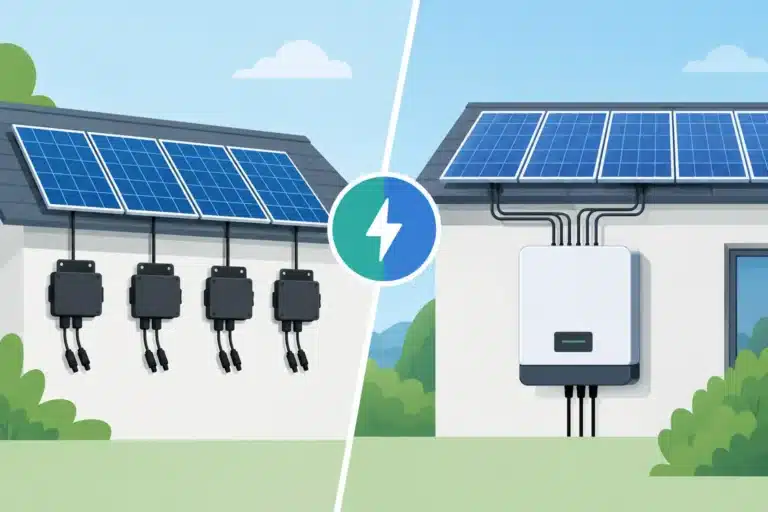
Your existing inverter plays a major role in battery compatibility. Some homes can add an AC-coupled battery, which works alongside the current solar inverter. Others may benefit from a hybrid inverter that manages solar panels and battery storage together.
AC-coupled systems can be a practical retrofit for homes with a relatively new solar installation. A hybrid setup may offer a cleaner path when you are installing solar and storage at the same time, or when an older inverter is due for replacement. Neither approach wins in every situation. The right answer depends on your current equipment, roof solar size, budget, and whether backup power is a requirement.
It is also worth considering expansion. If you expect to add solar panels, a heat pump, electric vehicle charging, or more battery capacity later, choose equipment that can support that plan. Paying for a system that cannot grow with your household can cost more in the long run.
A Practical Way to Make Your Solar Battery Comparison
Bring the decision back to your household goals. If lower evening bills are the priority, focus on usable capacity, charging behavior, and how much solar surplus you regularly export. If outage protection matters most, prioritize backup power output, supported circuits, and the installation design. If you want to electrify more of the home over time, look for a system with room to expand.
A quality quote should make these trade-offs easy to see. It should not pressure you into a one-size-fits-all package or hide technical limitations behind broad savings claims. Sol Excel helps homeowners assess system size, battery options, installed pricing, and available incentives so the recommendation fits the property rather than a sales target.
The right battery should work quietly in the background: storing your excess solar, reducing what you buy from the grid, and giving you confidence when household energy needs change. Start with your real usage, insist on clear specifications, and choose an installer prepared to stand behind the system long after installation day.