A strong solar feed in tariff Victoria offer can put real credit back on your electricity bill, but it should never be the only reason you choose a solar system. Export rates matter, especially in the early years of ownership. Yet the biggest savings usually come from using your solar power at home rather than selling it back to the grid for a smaller amount.
For Melbourne households, the smart question is not simply, “Which retailer pays the highest feed-in rate?” It is, “How can my home use more of the power my panels produce?” The answer may involve the right system size, daytime appliance use, an electric hot water upgrade, or a solar battery that stores surplus generation for the evening.
What Is a Solar Feed In Tariff in Victoria?
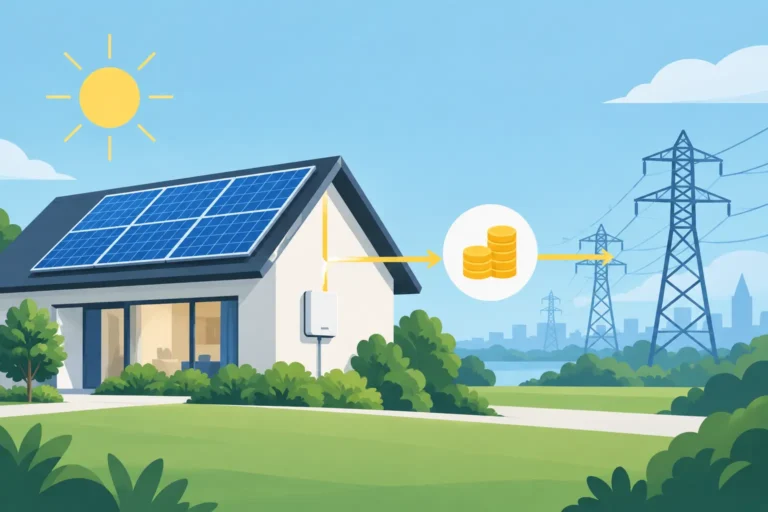
A feed-in tariff is the amount your electricity retailer pays or credits you for each kilowatt-hour (kWh) of solar electricity exported from your home to the grid. Your solar panels generate power during daylight hours. Your home uses that power first, and any excess is sent through your meter into the electricity network.
Your retailer then applies a credit to your bill based on the export rate in your electricity plan. For example, if your system exports 10 kWh on a sunny day and your feed-in rate is 5 cents per kWh, that export creates a 50-cent bill credit.
That sounds straightforward, but feed-in rates vary between retailers and plans. They can also change over time. Some plans offer a higher rate for a limited amount of daily exports, while others pair a lower feed-in rate with a more competitive electricity usage rate. Looking only at the headline feed-in tariff can lead to a more expensive overall bill.
Why Using Solar Power Yourself Delivers Better Value
The price you pay to buy electricity from the grid is generally far higher than the amount you receive for exported solar. This difference is the key to getting better returns from your system.
If your household avoids buying one kWh of grid electricity because it uses power directly from the panels, you avoid paying your retailer’s normal usage charge for that unit. If you export the same kWh, you receive only the feed-in credit offered under your plan. Exact rates differ, but self-consumption is commonly worth more than export income.
This is why an appropriately sized solar system matters. A very large system can generate impressive amounts of power, but if your home is empty all day and you do not have a battery or flexible electric appliances, a large share of that production may be exported at a modest rate.
A well-designed system considers your roof space, household energy use, future plans, and the times you use the most electricity. A family adding an electric vehicle, heat pump hot water system, reverse-cycle air conditioning, or pool equipment may have good reason to install more solar capacity than a household with low daytime demand.
How Your Solar Export Credit Is Calculated
Your bill records two different types of electricity movement: imports and exports. Imports are the units you buy from the grid when your solar production does not meet demand. Exports are the excess solar units sent to the grid.
Your retailer charges you for imported electricity under your chosen plan and applies feed-in credits for exported electricity. You may also see daily supply charges, controlled-load charges, and time-of-use rates. This is why a bill can remain higher than expected even after installing solar – solar reduces energy purchases, but it does not automatically remove every electricity cost.
Your export credit depends on three things: the number of kWh exported, the feed-in rate on your plan, and any special conditions attached to that plan. Some offers have capped premium rates, eligibility requirements, or rates that change at different times. Read the electricity plan carefully before switching retailers.
Choosing a Retailer Plan Beyond the Feed-In Rate
A high solar feed-in tariff can look attractive in an advertisement. However, it may come with higher daytime electricity rates, higher supply charges, or a premium rate that applies only to a small daily export allowance.
The best plan depends on your actual usage pattern. A household that exports heavily during the middle of the day may benefit from a different plan than a household with a battery that imports little electricity after sunset. If you work from home, run cooling during the day, or heat water with solar generation, you may export less and place greater value on lower import rates.
Compare the whole offer, including the following:
- the usage rate for electricity you buy from the grid
- daily supply charges and controlled-load charges
- the feed-in rate and any export caps
- time-of-use pricing periods
- contract terms and how often rates can change
A practical approach is to review several recent bills. Look at how many kWh you import and export, then compare what each plan would cost based on those numbers. Do this again after installing solar, because your consumption profile will change.
Ways to Increase Solar Self-Consumption
The most affordable solar power is usually the power you generate and use immediately. Small changes to household routines can make a noticeable difference over a year.
Run dishwashers, washing machines, dryers, and pool pumps during sunny daytime periods where practical. Use timer settings rather than relying on memory. If you have air conditioning, pre-cool or pre-heat your home while solar production is strong, then reduce demand later in the day when the sun is lower.
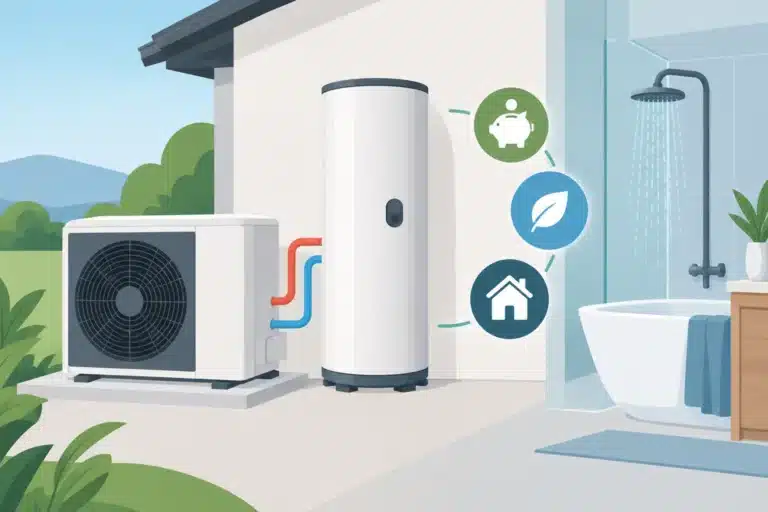
Electric hot water can be especially useful for soaking up daytime solar production. A heat pump system uses far less electricity than traditional electric resistance hot water, and smart scheduling can prioritize solar generation. For homes moving away from gas, combining solar with efficient heating, cooling, and hot water equipment can reduce reliance on grid energy across more of the household.
These changes should fit your life. There is little value in running appliances at inconvenient times just to chase a few cents. Automation, timers, and efficient equipment make self-consumption easier without turning energy management into a daily chore.
Can a Battery Improve Your Savings?
A solar battery stores electricity that would otherwise be exported, allowing you to use it after sunset or during higher-priced grid periods. This can lift your solar self-consumption substantially and give your household more control over when it buys power from the grid.
A battery is not automatically the best financial choice for every home. Its value depends on your nightly electricity use, export rate, grid electricity prices, battery size, available incentives, and whether backup power matters to you. Households with high evening use often see more value than households that already consume most solar generation during the day.
Battery backup can also be important for families who want selected circuits operating during an outage. However, backup capability depends on the battery model, inverter setup, switchboard configuration, and the circuits included in the design. It should be discussed before installation, not assumed afterward.
Size Your Solar System for Today and Tomorrow
Your feed-in tariff should influence your system design, but it should not dictate it. The goal is to install a quality solar system that supports lower bills now while allowing for likely future electricity needs.
Consider whether you expect to add a battery, electric vehicle, heat pump, induction cooking, or more reverse-cycle heating and cooling in the next few years. Victoria’s move toward efficient electric appliances means many households will use more electricity overall while reducing gas costs. A system that seems oversized today may be well matched to your home once those upgrades are in place.
Professional design also matters. Panel orientation, shading, inverter selection, roof layout, switchboard capacity, and meter requirements all affect performance. A low upfront price is only good value when the equipment is suitable, the installation is properly coordinated, and warranty support is clear.
At Sol Excel, we focus on practical system sizing and professionally installed home-energy upgrades that make sense for Victorian households. A clear quote should explain what you are buying, what rebates may apply, and how the design supports your actual energy habits.
Check Your Plan After Solar Is Installed
Do not set and forget your electricity plan after installation. Once your system has been operating for a few billing cycles, review your imports, exports, and total charges. This gives you real data rather than estimates.
If your export volume is high, a better retailer plan, battery, or changes to daytime energy use may improve your outcome. If your exports are lower than expected, that can be good news too – it may mean your household is using more of its own clean, low-cost solar power.
The feed-in tariff is a useful credit, but your biggest opportunity sits on your roof. Use as much of that generation as you can, choose a plan based on the full bill, and build a solar setup that still works hard for your family as your home becomes more electric.