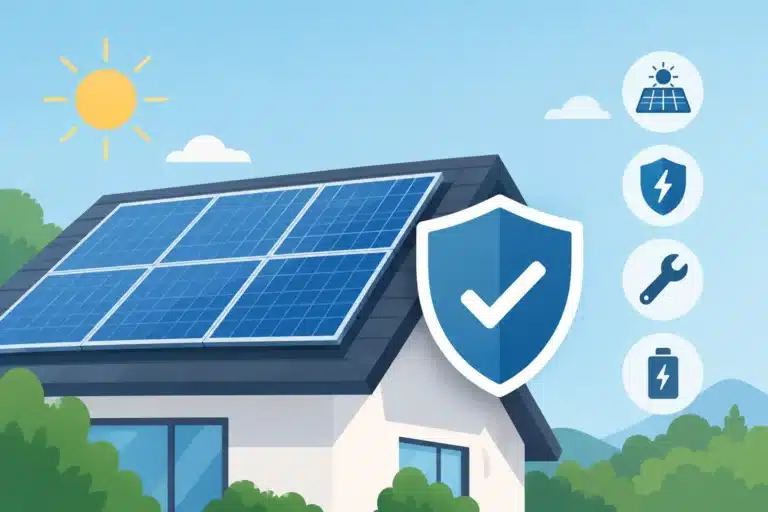
A solar system can lower your electric bills for decades, but the warranty is what protects your investment if a component does not perform as promised. So, what does a solar panel warranty cover? Usually, it covers two very different things: defects in the panel itself and the panel’s ability to produce power over time. It may also sit alongside separate warranties for the inverter, battery, mounting equipment, and installation work.
The details matter. A 25-year warranty sounds reassuring, but it does not mean every issue with your solar system is covered for 25 years. Knowing what is included, what is excluded, and who handles a claim can save considerable frustration later.
What Does a Solar Panel Warranty Cover?
Most quality solar panels come with a product warranty and a performance warranty. They protect different risks, have different time frames, and may involve different claim requirements.
Product warranty: defects in the panel
A product warranty, sometimes called a manufacturer or materials warranty, covers faults caused by defective materials or manufacturing. Depending on the manufacturer and panel range, coverage often runs from 12 to 25 years, with some premium panels offering longer terms.
This warranty may apply if a panel develops a manufacturing-related issue such as premature delamination, failed junction boxes, abnormal corrosion, cracked backsheets under normal conditions, or a defect that prevents the panel from working properly. If the manufacturer accepts the claim, the remedy may be repair, replacement, or a credit toward an equivalent current model.
The key phrase is “manufacturing defect.” If a panel is damaged after installation by hail beyond its rating, a falling branch, fire, vandalism, or an accident, that is generally an insurance matter rather than a product warranty claim.
Performance warranty: long-term power output
Solar panels slowly lose output as they age. That decline is expected, which is why a performance warranty does not promise the same production in year 25 as it did on day one. Instead, it guarantees that the panel will retain a minimum percentage of its original rated output at certain points in its life.
A common example is a warranty that promises around 80% to 90% of original output after 25 years, although the exact percentage and annual degradation rate vary by brand. Higher-quality panels may guarantee a lower annual degradation rate and stronger output at the end of the warranty period.
This coverage is useful, but it is not a promise that your household will receive a certain dollar amount in savings. Shading from tree growth, dirty panels, unusually cloudy weather, roof orientation, system design, and changes in electricity rates all affect real-world results. A performance warranty addresses panel output under specified test conditions, not every factor that influences your bill.
A Solar Warranty Is More Than the Panels
A complete solar system has several major components. Each can have its own warranty, and each may be handled by a different manufacturer. Before you sign a contract, ask for the written warranty terms for every item in the proposal, not just the panel brand.
Inverter warranty
The inverter converts the electricity produced by your panels into usable power for your home. Because it contains active electronics, it often has a shorter warranty than the panels. Many string inverters include 10 to 12 years of coverage, while some brands offer extensions. Microinverters may carry longer terms, but the coverage and labor provisions still differ by manufacturer.
An inverter warranty may cover a failure caused by a defect. It may not cover communication problems caused by lost internet service, damage from an external power surge, or issues resulting from an incorrectly modified system.
Battery warranty
If your system includes battery storage, read its warranty separately. Battery warranties typically cover a stated number of years, a minimum retained capacity, a throughput limit, or a combination of these conditions. They may also require the battery to operate within a specified temperature range and be connected to the internet for monitoring and diagnostic support.
Battery coverage is especially worth reviewing because daily use, backup settings, and operating environment can affect long-term capacity. A strong warranty is valuable, but choosing the right battery size and configuration for your usage is just as important.
Workmanship warranty
The installer or installation coordinator may provide a workmanship warranty that covers errors in installation. This can include improperly secured mounting hardware, faulty wiring connections, flashing problems related to the solar installation, or a system that was not installed to the approved design.
Workmanship coverage is separate from the panel manufacturer’s warranty. A perfectly good panel will not solve a poor installation, which is why qualified installers, clear accountability, and documented commissioning matter. Ask how long the workmanship warranty lasts, who you contact first if there is an issue, and whether labor, travel, and replacement equipment handling are included.
What Solar Warranties Commonly Do Not Cover
Warranty exclusions are not a reason to avoid solar. They are simply the fine print that defines where manufacturer responsibility ends. Most exclusions are reasonable, but you should understand them before relying on a headline warranty length.
Common exclusions include:
- Physical damage from storms, falling objects, fire, flooding, vandalism, pests, or accidents
- Damage caused by unauthorized repairs, system alterations, or improper cleaning methods
- Reduced production caused by shade, soiling, weather, grid outages, or changes to your roof surroundings
- Normal cosmetic changes that do not affect panel performance
- Problems caused by components that were not supplied, approved, or installed as part of the original system
Some warranties also exclude labor costs, shipping charges, removal of defective panels, or reinstallation. This is one of the biggest practical differences between warranties. A manufacturer may replace a faulty panel, but the cost to access the roof and install the replacement may fall outside the product warranty unless your installer or provider includes labor coverage.
How to Make a Warranty Claim Easier
Good paperwork is not exciting, but it is useful when a system is expected to operate for 25 years or more. Keep your signed contract, itemized equipment list, serial numbers, commissioning documents, proof of purchase, installation photos, and warranty certificates in one digital folder.
Monitoring also helps. A sudden production drop, recurring inverter alert, or unexplained fault code is easier to investigate when you have a record of when it began. Do not assume every lower-than-expected bill is a panel failure. Start by checking the monitoring platform, recent utility usage, seasonal changes, and whether new shade has developed around the property.
If you believe there is a fault, contact the company that sold or installed the system first, unless your paperwork directs you otherwise. Provide your system details, screenshots of alerts, and clear photos if there is visible damage. A reputable provider should help determine whether the issue is related to equipment, installation, monitoring, or something outside warranty coverage.
Questions to Ask Before You Buy
A long warranty has value only when its terms are clear and the companies behind it can support it. Ask whether the quoted panels have both product and performance coverage, what output is guaranteed at the end of the performance term, and whether labor is included for approved claims.
Also ask who manages service after installation. You want a straightforward point of contact, not a situation where the panel maker, inverter brand, and installer each direct you somewhere else. Sol Excel focuses on professionally installed systems and clear product information because homeowners should be able to compare price, equipment quality, and long-term support together.
Finally, do not judge a solar proposal on warranty length alone. Compare panel quality, inverter coverage, workmanship protection, expected production, installation standards, and the total installed price. The best value is a properly designed system that performs reliably, comes with support you can actually use, and helps keep more of your money out of the utility bill.