That chlorine smell when you fill a glass, white scale around faucets, or the constant cost of bottled water can turn a basic household essential into an everyday frustration. The right water filtration system gives your household a more reliable supply of better-tasting water at the tap, while helping protect plumbing fixtures and water-using appliances from sediment and mineral buildup.
The best choice is not always the biggest or most expensive unit. It depends on your water supply, what you want filtered, the number of people in your home, and whether you want cleaner water at one faucet or throughout the entire property. A properly specified system delivers real value. A poorly matched one can reduce water pressure, create unnecessary maintenance costs, or fail to address the concern that led you to buy it.
What a Water Filtration System Can Improve
Municipal water is treated to meet safety requirements, but treatment does not always mean water will taste, smell, or perform exactly as you want it to. Chlorine is commonly used for disinfection and can leave a noticeable taste or odor. Sediment can affect water clarity and clog fixtures. Minerals may create scale on shower screens, kettles, and heating elements.
A water filtration system is designed to target specific issues. Carbon filtration can improve chlorine taste and odor. Sediment filters trap dirt, rust, and fine particles before they reach fixtures. More advanced systems can reduce a broader range of dissolved contaminants, depending on the filtration technology and the product’s tested claims.
For many households, the benefit is practical: drinking water that tastes better, less reliance on single-use bottles, and cleaner water for cooking. For whole-home systems, the advantages can extend to showers, laundry, dishwashing, and the equipment that keeps the home comfortable and efficient.
Filtration and water softening are not the same thing
These products are often grouped together, but they solve different problems. Filtration removes or reduces unwanted particles and substances. Water softening focuses on hardness minerals, typically calcium and magnesium, that cause scale.
If scale is the main concern, a softener or scale-control solution may be more relevant than a standard carbon filter. If chlorine odor is the problem, a carbon-based filter is usually the logical starting point. Homes with several water concerns may need a combined approach. This is why understanding the water issue before choosing equipment matters more than choosing based on marketing claims alone.
Choosing a Water Filtration System for Your Home
Start with the outcome you want. A family that wants cleaner drinking water may only need a point-of-use system under the kitchen sink. A homeowner replacing appliances, upgrading hot water, or protecting the entire plumbing network may see greater value in a whole-home installation.
A water test or a local water-quality report gives you a stronger basis for comparison. It can reveal whether you are dealing with chlorine, sediment, hardness, lead concerns from older plumbing, or another issue. Do not assume every filter removes every contaminant. Check the manufacturer’s performance information and confirm that the technology is intended for your particular concern.
Four common options cover most household needs:
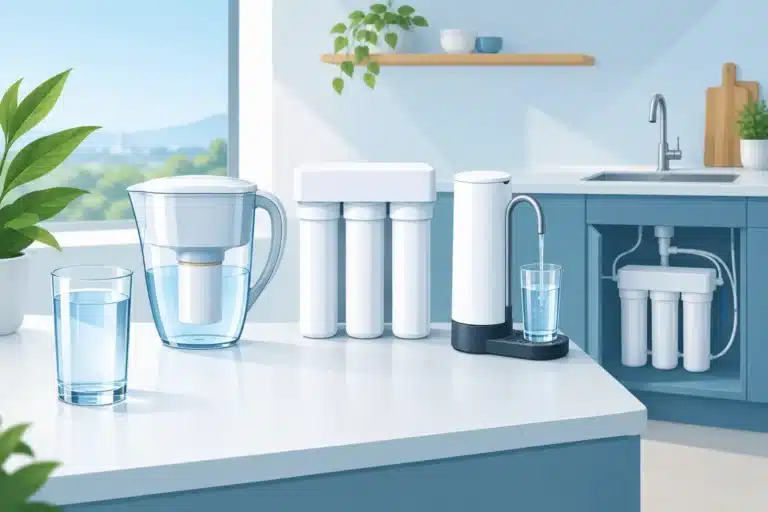
- Pitcher and countertop filters are affordable and simple, but they filter limited volumes and require frequent cartridge changes.
- Faucet-mounted or under-sink filters provide convenient filtered drinking and cooking water without treating the entire home.
- Reverse osmosis systems use a membrane to reduce many dissolved substances. They can produce very clean drinking water, though they need space, periodic servicing, and may discharge some water during filtration.
- Whole-home filtration systems are installed at the main water entry point, supplying treated water to taps, showers, appliances, and toilets. They are the most comprehensive option for households seeking property-wide coverage.
There is no universal winner. A reverse osmosis unit can be an excellent choice for a dedicated drinking-water tap, but it is not always necessary for every faucet in the house. A whole-home carbon and sediment system can improve the daily water experience throughout the property, but it may not address high hardness without additional treatment.
Think about flow rate before you buy
A whole-home system must keep up with demand. If the filter is undersized, you may notice weak flow when someone is showering while the dishwasher or washing machine is running. Larger homes, multiple bathrooms, and households with higher water use need equipment sized for the expected flow rate, not simply the lowest initial price.
Ask about the system’s rated flow, pressure drop, filter capacity, and replacement schedule. These details affect the experience long after installation day. A good installer will also consider pipe size, available space, drainage needs where relevant, and access for future filter changes.
Whole-Home Filtration: Where It Delivers the Most Value
A whole-home system is installed where the water line enters the property, before water travels to the kitchen, bathrooms, laundry, and appliances. That placement makes it a strong option for homeowners who want more than filtered drinking water.
For example, sediment filtration can help protect washing machines, dishwashers, taps, and shower fixtures from particle buildup. Chlorine reduction may improve the odor of shower water and make laundry feel less harsh. When paired with the right scale-management solution, whole-home treatment can also support the long-term performance of water heaters and other equipment that relies on steady water flow.
This broader coverage comes with a higher upfront investment than a single under-sink filter. It also needs professional installation and accessible placement for maintenance. For homeowners making other major upgrades, such as an efficient hot-water system or electrified home equipment, planning water treatment at the same time can make the installation process more coordinated and cost-effective.
Do Not Overlook Ongoing Costs
The purchase price is only one part of the decision. Every water filtration system has an ongoing maintenance requirement, whether that means replacing a cartridge, changing a membrane, adding salt to a softener, or scheduling a service check.
Before committing, calculate the expected cost over several years. A low-cost unit with expensive filters changed every few months may cost more than a better-built system with a longer filter life. Replacement intervals also vary based on water quality and household usage. A four-person household will usually consume filter capacity faster than a couple living in the same property.
Maintenance should be easy enough that it actually gets done. Filters left in service past their rated life can reduce flow and filtration performance. Choose a system with clear replacement instructions, readily available consumables, and a realistic service schedule.
Installation Quality Matters as Much as the Filter
Water treatment equipment connects directly to your home’s plumbing. Incorrect installation can lead to leaks, pressure problems, difficult filter access, or a system that bypasses the very water lines you intended to treat.
Professional installation is especially worthwhile for whole-home systems, reverse osmosis units, and any setup requiring changes to pipework, drainage, or a dedicated drinking-water faucet. Qualified installers can position equipment properly, fit isolation valves for easier servicing, and test the system before handover.
Ask clear questions before work begins. Confirm what is included in the quoted price, whether replacement filters are available, how the warranty works, and what maintenance is required to keep coverage valid. Straight answers on equipment, workmanship, and future service are a better sign than a vague promise of “pure water.”
A Practical Way to Make the Right Call
If you are unsure where to begin, focus on the problem rather than the product. Is your concern taste, odor, scale, sediment, drinking-water quality, or the protection of the whole plumbing system? Then match the equipment to that need and your household’s water use.
The right system should fit your property, deliver the filtration you actually need, and remain affordable to maintain. Cleaner water is not about buying the most complicated unit on the market. It is about making a well-informed upgrade that works reliably every time you turn on the tap.