A failing electric storage tank can quietly become one of the most expensive appliances in a Victorian home. It heats water day and night, often using power when your household solar system is not producing. The heat pump hot water rebate Victoria homeowners ask about can make replacing that old unit far more affordable – while cutting the electricity needed for showers, dishes, and laundry.
For many Melbourne households, the decision is not simply whether to replace a hot water system. It is whether to install another high-running-cost tank or move to a heat pump that uses far less energy. With the right rebate pathway, eligible product, and professional installation, a heat pump can be a practical upgrade rather than a major upfront expense.
What is the heat pump hot water rebate in Victoria?
Victoria supports eligible energy-efficient hot water upgrades through the Victorian Energy Upgrades program. Rather than handing every household the same cash payment, the program creates Victorian Energy Efficiency Certificates for approved upgrades. Those certificates have value, and an accredited provider can apply that value as a discount on the installed price.
That means the rebate is usually reflected in your quote. You should see the full installation price, the applicable incentive or certificate discount, and the amount you pay after the discount. Clear pricing matters. A low advertised number is not useful if it excludes electrical work, plumbing changes, removal of the old tank, or the equipment needed to complete a safe installation.
The available discount is not a fixed figure forever. It can change with certificate values, the product selected, your existing hot water system, and program rules. Ask for a current, itemized quote before making a decision.
Why a heat pump costs less to run
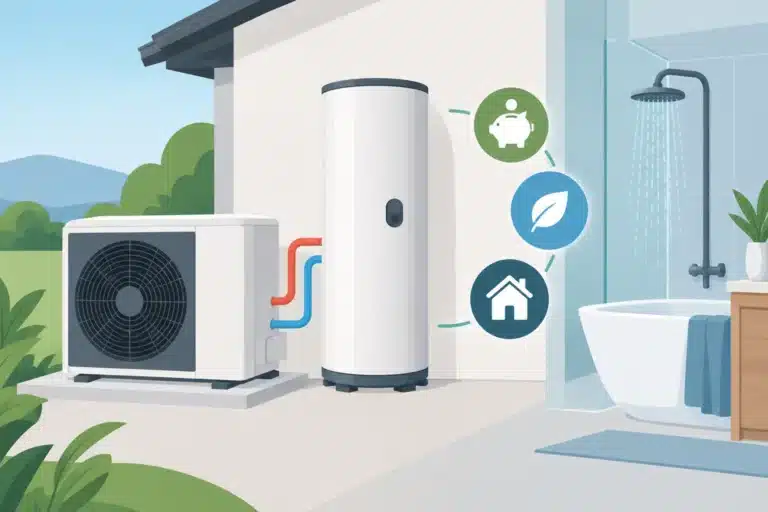
A conventional electric resistance tank makes heat directly from electricity. A heat pump works differently. It draws low-grade heat from the surrounding air and transfers it into the water, much like an air conditioner operating in reverse.
Because it moves heat rather than generating all of it from scratch, a quality heat pump can use substantially less electricity than an older electric tank. The real saving depends on your household’s hot water use, electricity rate, tariff, local climate, unit settings, and the condition of the system being replaced. Still, for homes moving away from an inefficient electric tank, the change can be significant.
Heat pumps are particularly compelling when paired with solar. If the system is scheduled to heat water during daylight hours, your home can use more of the electricity produced on the roof instead of exporting it to the grid at a lower rate. Hot water then becomes a form of useful thermal storage: you are storing solar energy as hot water for later use.
That does not mean every home should run its system only in the middle of the day. Larger families, shift workers, and households on certain tariffs may need a different schedule. The best setting is the one that maintains reliable hot water while making the most of your solar generation and electricity plan.
Who may qualify for a Victorian heat pump rebate?
Eligibility is tied to the upgrade, the property, the equipment, and the installation process. In most cases, the home needs to be in Victoria and the replacement must meet the requirements of the current Victorian Energy Upgrades program. The heat pump model must be approved, and the work must be completed by an appropriately accredited provider using qualified trades.
Your existing system also matters. Replacing an old electric storage water heater is commonly a straightforward case for assessing an upgrade, but outcomes can differ when replacing gas, solar hot water, or another heat pump. Rental properties, new builds, and commercial sites can have different requirements as well.
Do not assume that any heat pump purchased online will attract the same incentive. Product approval, installation documentation, and program compliance are central to the process. A cheaper unit can become expensive if it is not eligible, poorly sized, difficult to service, or installed without the paperwork needed to claim available incentives.
Details your installer should confirm first
Before installation, a reputable provider should confirm the address, existing hot water type, household needs, proposed product, and available installation location. They should also explain any customer contribution, consent forms, and evidence needed under the program.
This is also the time to identify site-specific costs. Some homes need a new electrical circuit, upgraded isolation, a concrete base, pipework changes, or extra space to safely position the outdoor unit. These are not reasons to avoid a heat pump. They are reasons to receive an accurate quote instead of a headline price that changes on installation day.
Choosing the right heat pump, not just the biggest rebate
The best heat pump is not automatically the unit with the largest advertised discount. Capacity, recovery time, noise, warranty, operating conditions, and after-sales support all affect whether it will suit your home for the next decade or more.
A smaller household may be well served by a compact system, while a family with multiple bathrooms and high morning demand may need more stored hot water or faster recovery. If everyone showers before work and school, the available hot water at 7 a.m. matters more than a brochure figure measured under ideal conditions.
Location deserves equal attention. Heat pumps need airflow, so they are generally installed outdoors or in an appropriately ventilated position. Consider clearance, drainage, access for future maintenance, and sound near bedrooms or neighboring properties. Modern systems can be quiet, but quiet is not silent. Good placement protects comfort as well as performance.
Warranty coverage should be easy to understand. Ask what is covered for the tank, compressor, controls, labor, and installation workmanship. Also ask who you contact if there is a fault. A strong warranty has more value when there is a local team and qualified installer behind it.
Getting the most from a solar and heat pump combination
A heat pump can lower hot water costs on its own, but solar can improve the financial result. The key is coordinating the timer or smart controls with your household’s generation pattern. In a typical Melbourne home, heating water from late morning through the afternoon may let the system use surplus solar power.
There are trade-offs. Winter solar production is lower, cloudy days happen, and some households need hot water outside the preferred solar window. A sensible setup keeps enough stored hot water for daily comfort first, then targets solar self-consumption where practical. There is little value in chasing export savings if it leaves the family without reliable hot water.
If you are considering solar panels, a battery, air conditioning, and hot water upgrades, planning them together can prevent duplicated electrical work and help you choose equipment that works as one home-energy system. It can also give you a clearer view of where your household’s electricity is going.
Questions to ask before accepting a quote
Price matters, but it should be a complete installed price. Ask whether the quote includes rebate processing, removal and disposal of the old system, plumbing and electrical work, tempering valves where required, delivery, commissioning, and any likely site variation costs.
You should also ask how the system is sized for your household, when it will normally heat water, what noise level to expect, and how long the installation warranty lasts. If a provider cannot explain the difference between equipment warranty and workmanship warranty, keep looking.
Sol Excel can help Victorian homeowners assess a heat pump hot water upgrade alongside solar and battery options, with a focus on transparent pricing, eligible products, and qualified installation coordination. The goal is simple: choose a system that reduces running costs without compromising the hot water your household relies on.
Make the rebate work for your home
A Victorian heat pump incentive can reduce the upfront barrier, but the long-term value comes from installing the right system correctly. Check current eligibility before signing, compare complete quotes rather than discounts alone, and make sure the capacity, placement, warranty, and controls suit how your family actually uses hot water.
The strongest upgrade is one that feels uneventful after installation: dependable hot water every day, less electricity bought from the grid, and a home that is better prepared for the move toward efficient electric living.