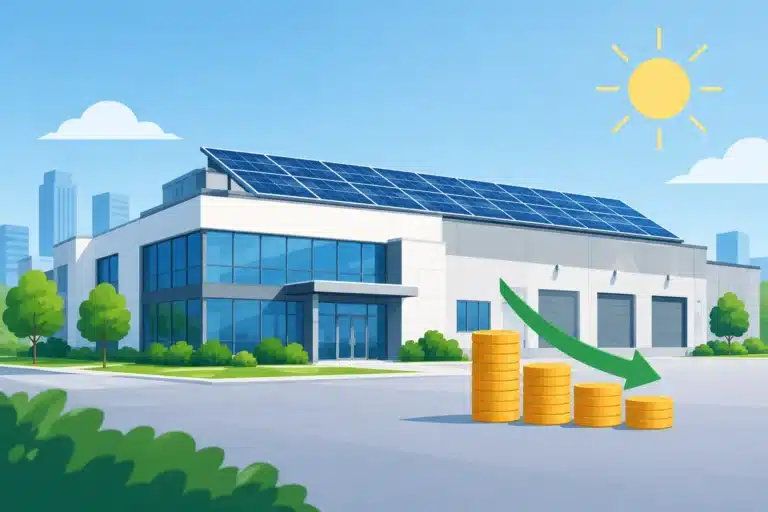
A high electricity bill is not just another operating expense. For many businesses, it is a cost that rises with production, customer traffic, cooling demand, refrigeration, or long business hours. Commercial solar systems give owners a practical way to generate power where it is used, reduce reliance on the grid, and put more control back into the budget.
The right system is not simply the largest array that fits on a roof. It is a site-specific investment based on how your business uses energy, when it uses the most power, the condition of the building, and the financial outcome you need. With professional design, quality equipment, and qualified installation, solar can turn unused roof space into a long-term cost-saving asset.
Why Commercial Solar Systems Make Financial Sense
Businesses pay for electricity differently from most households. Usage is often higher, operating hours can overlap with expensive daytime periods, and demand charges may apply depending on the utility and rate plan. That makes on-site solar especially valuable for businesses that consume significant energy while the sun is out.
A well-sized commercial solar system can offset a portion of daytime electricity purchases before power reaches your meter from the grid. Offices, warehouses, manufacturers, retail stores, schools, medical practices, farms, and hospitality venues can all benefit, although the savings profile will vary. A business with heavy daytime consumption may use more of its solar generation directly, which generally creates a stronger financial result than exporting large amounts of surplus energy.
Solar also helps make future energy costs more predictable. It will not eliminate every utility bill, and grid charges, nighttime usage, and fixed fees still matter. But reducing the amount of electricity you need to buy can provide meaningful protection against rising rates over the life of the system.
For businesses with public-facing sustainability goals, solar can also support a credible story. Customers, tenants, employees, and procurement teams increasingly ask how companies are reducing energy use and emissions. Generating clean power on-site is a visible, measurable action rather than a vague promise.
Start With Your Energy Use, Not Panel Count
The fastest way to make a poor solar decision is to choose a system size based only on a headline price. Commercial projects need a closer look because a low upfront number can hide weak equipment, poor system design, limited warranty support, or a system that does not match the building’s actual load.
Start with at least 12 months of electricity bills. These show total consumption, seasonal changes, tariff structure, and, in many cases, interval data that reveals when your business uses power. A cold-storage facility, for example, may have a consistently high load. A restaurant may peak around meal service. An office may see its highest consumption during summer air conditioning hours.
Your solar design should reflect those patterns. If most consumption happens during the day, a larger solar array may make sense. If a major share of use occurs after sunset, battery storage, load shifting, or energy-efficient equipment may need to be part of the conversation. There is no one-size-fits-all answer, which is why a proper consultation matters.
It is also smart to consider the next five to 10 years. Are you adding machinery, extending operating hours, installing EV chargers, converting gas equipment to electric, or expanding into an adjoining space? Designing with those changes in mind can avoid costly rework later.
The Building Matters as Much as the Equipment
A commercial roof has to do more than hold panels. Its condition, material, slope, available area, shading, access, and structural capacity all affect the project. Before installation, an experienced provider should assess whether the roof is suitable and whether upcoming repairs or replacement should be completed first.
Installing solar on a roof that needs major work soon can create unnecessary expense. Panels may need to be removed and reinstalled when roofing work begins. In some cases, a ground-mounted system, carport canopy, or a phased installation is a better fit than placing everything on the main roof.
Shading deserves careful attention too. Nearby buildings, trees, roof plant, parapets, vents, and future construction can reduce production. Modern panel layouts and inverter technology can help manage complex sites, but they cannot make persistent shade disappear. A clear assessment upfront is more valuable than unrealistic production promises.
Electrical infrastructure is another important factor. Your main switchboard, service capacity, existing protection equipment, and utility connection may need upgrades before the system can be commissioned. These costs should be identified early, not introduced as a surprise after a contract is signed.
Choosing Panels, Inverters, and Batteries
Commercial solar equipment should be selected for dependable output, compatibility, safety, and warranty support, not just for a recognizable brand name. Quality panels, properly matched inverters, and professional installation all contribute to long-term performance.
Panels capture sunlight, while inverters convert that energy into usable electricity for the building. The inverter is central to the system’s performance and monitoring, so it deserves the same attention as the panels. For larger or more complex sites, the design may use multiple inverters, different panel orientations, or a layout that separates areas with different shading conditions.
Battery storage can be valuable, but it is not automatically the right first step. Batteries may help a business use more of its own solar energy after daylight hours, support critical loads during outages when configured for backup, or reduce certain peak demand costs. Their value depends on the rate structure, operating schedule, load profile, backup requirements, and available incentives.
For some businesses, the strongest return comes from solar first, followed by efficiency upgrades such as high-efficiency HVAC, heat pump water heating, LED lighting, controls, or refrigeration improvements. Reducing wasted energy can allow a solar system to cover a larger share of the remaining load. A provider that looks at the whole site can help you prioritize rather than sell equipment you do not need.
Incentives, Tax Treatment, and Payback
Incentives can improve the economics of commercial solar systems, but eligibility rules change. Depending on your location and project type, there may be federal tax incentives, state or utility programs, accelerated depreciation options, renewable energy certificates, or financing arrangements that reduce the initial cost.
The key is to verify current requirements before making decisions. Incentives may have equipment standards, installation deadlines, ownership rules, application steps, or capacity limits. Your solar provider can explain the project side, while your accountant or tax advisor should confirm how available tax benefits apply to your business.
Payback periods are often a major focus, and they should be. Still, the answer is not a single number that applies to every building. Electricity rates, self-consumption, export compensation, financing costs, roof conditions, system size, incentives, and future utility price changes all affect the result.
Ask for a clear proposal that explains estimated annual generation, assumptions about electricity savings, equipment specifications, warranties, and any exclusions. A good proposal makes the financial case understandable. It does not rely on vague claims or hide important project costs in fine print.
Installation Quality Protects the Investment
Commercial solar is a long-term asset, so installation quality matters long after commissioning day. Work should be completed by appropriately licensed, certified professionals who understand commercial electrical systems, roof safety, permitting, utility interconnection, and equipment manufacturer requirements.
A reliable installer will coordinate the practical details: site assessment, system engineering, approvals, utility paperwork, installation scheduling, commissioning, and system handover. You should also receive access to monitoring so you can see production, identify unusual performance changes, and keep a record of system output.
Warranties should be reviewed in plain language. Panel product warranties, performance warranties, inverter warranties, workmanship coverage, and roof penetration responsibility are not the same thing. Ask who handles a fault, what the service process looks like, and whether the company will still be available if support is needed years from now.
Price matters, especially on a commercial project, but the cheapest quote is not always the lowest-cost decision. Compare the full scope: system size, expected output, equipment, electrical upgrades, warranty terms, installation credentials, monitoring, and after-sales support. A competitive price should come with a design that stands up to scrutiny.
A Practical Next Step for Your Business
The best commercial solar project begins with accurate bills, a realistic site assessment, and a provider willing to explain the numbers without pressure. Sol Excel helps customers assess practical energy-saving options with qualified installation coordination, dependable equipment, and value-focused pricing.
Bring your recent electricity bills and a clear picture of upcoming business changes to the conversation. The right solar system should fit the way your business operates now while giving you a stronger position against the energy costs ahead.